

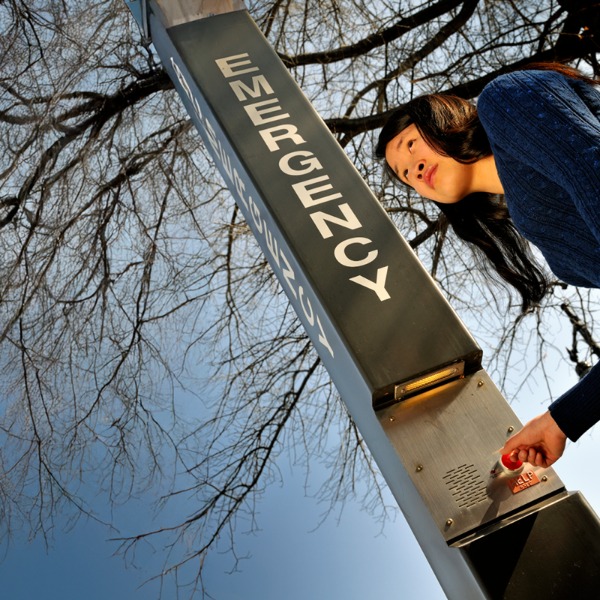
AT&T’s permanent copper shutdown started June 30, 2026, and the analog phone lines behind campus fire panels, elevator phones, and blue-light emergency stations are now starting to be switched off. Universities that still run safety systems over plain old telephone service (POTS) should begin the process of migrating those lines to digital service before students return in the fall, or risk having life-safety equipment go dark.
Why are university campuses more exposed than other businesses?
A campus is not one building with a couple of analog lines. It is dozens or hundreds of buildings, some of them decades old, spread across acres, with copper wiring embedded in infrastructure that predates modern digital systems. All of it has to move to digital service in a coordinated way, at the same time.
A retail chain or single office can swap a handful of analog lines in one contained project. Universities cannot. Their infrastructure is:
- Multi-building and multi-acre, so the transition has to run across dozens of physical locations at once.
- Older and more varied, with mixed-vintage systems installed across different decades and under different building codes.
- Dense with many endpoints, so the replacement has to scale across hundreds of lines, not a handful.
A POTS replacement plan built for a single office does not translate to a 200-building campus. It takes a trusted partner who has successfully managed complex, multi-site transitions at scale.
Which campus systems still run on copper?
Several categories of campus infrastructure still depend on copper lines that are now being phased out. These include:
- Emergency phones and perimeter call boxes, including the blue-light phones across quads and parking areas.
- Fire alarm systems, where panels use analog signaling to reach responders.
- Security and intrusion alarm systems wired to legacy lines.
- Elevator emergency phones inside the cab.
- Points Of Sale (POS) terminals in dining halls, bookstores, and student unions.
- Fax machines, still in daily use across administrative and health services offices.
Since many of these are tied to life-safety obligations and regulatory requirements, a university cannot afford to have any of them go dark, even briefly.
What happens if a copper line gets switched off before it’s replaced?
When a safety-critical system fails because the copper behind it was simply turned off, the fallout goes well past an inconvenient outage. Think about a Life-safety liability if an emergency phone, fire panel, or elevator line goes silent during a real emergency and the reputational damage if a failure becomes public, especially one involving student safety.
There is also Insurance and accreditation risk tied to documented safety system reliability. Every one of these is avoidable with planning. The catch is that the planning has to happen before the lines go dead, not after.
What does a proper POTS replacement actually look like?
A real transition of copper does not happen overnight, and it should not be improvised. It starts with a full assessment of every analog line on campus: what each one connects to, what system depends on it, and how critical that system is. From there, a managed transition plan builds in the redundancy, failover, and backup power that safety systems need, so nothing goes dark during the changeover. Done right, the transition is invisible to students, faculty, and staff. In a recent guest blog for MetTel, Timor Brik, COO of DataRemote, shared insights from his extensive experience working with enterprises as they retire legacy copper infrastructure and how taking a managed approach best prepares organizations for this transition.
MetTel’s POTS Transformation solution is built around this managed approach. It works with the broadest range of legacy systems, including alarm panels, elevator lines, fax systems, and POS terminals, and it runs over a private network engineered with multi-layer redundancy. The POTS in a Box datasheet goes deeper on how the hardware handles failover and battery backup for safety-critical lines.
Can digital replacements really match copper for 911 and emergency calls?
Yes. For institutions wondering whether digital can stand in for a direct copper connection to emergency services, the answer is that it can and often performs better. MetTel’s blog on common POTS replacement myths explains how Enhanced 911 (E911) and modern failover-equipped digital systems now meet, and in many cases exceed, the reliability of legacy copper for emergency communications.
Has this been proven at scale?
MetTel is the nation’s leading POTS replacement provider for enterprises and the federal government, and its approach has already been adopted by Ivy League and Big Ten institutions making exactly this transition. The same managed model runs across tens of thousands of locations for organizations like the U.S. Postal Service and multi-site enterprises like Extra Space Storage, whose POTS Transformation case study details how a 2,000-location rollout was managed without disrupting daily operations.
For universities, the cost matters too. Institutions typically see savings of 30% or more once the transition is complete, and they stop absorbing the unpredictable price increases that come with aging copper service.
5 steps universities should act now to avoid service disruptions
Copper retirement is already underway, making now the time to plan a controlled transition rather than waiting until the last minute. Here are the next steps to future-proof your campus network:
- Inventory every analog line on campus. Most facilities and IT teams do not have a complete, current map of where copper still runs and what it connects to. Audit every building, including fire panels, alarm systems, elevator lines, emergency phones, POS terminals, and fax machines, before you assume you know the scope.
- Prioritize life-safety systems first. Not every line carries the same risk. Triage so emergency phones, fire alarm panels, and elevator lines get handled before lower-stakes systems like fax machines or back-office POS terminals.
- Confirm compatibility before you commit. Legacy alarm panels and emergency systems vary widely in age and protocol. Before signing off on any replacement, confirm it has been tested against the specific equipment already on campus, not just generic POTS lines.
- Build in redundancy and failover, not just digital conversion. A like-for-like copper-to-digital swap is not enough if the new system ignores power outages or network interruptions. Look for backup power and cellular failover so safety systems stay online when primary connectivity drops.
- Schedule around the academic calendar, not vendor convenience. Construction, building access limits, and downtime are far easier to manage during the summer lull than once campus is full. Lock in a timeline now that finishes well before move-in.
Together, these steps turn a reactive scramble into a controlled project with a clear endpoint before the first move-in truck arrives.
The time to act is before fall, not after
The copper shutdown is not a future risk to plan around eventually. It is happening now. The institutions in the best shape this fall will be the ones that finish an assessment while there is still time to coordinate a transition that never touches student safety or campus operations.
Frequently Asked Questions
What is copper retirement?
Copper Retirementis the phase out of legacy copper POTS lines by incumbent local exchange carriers (ILECS). As copper infrastructure is decommissioned, businesses must migrate from their old copper lines to modern, IP-based alternatives to avoid any disruptions.
What is plain old telephone service?
Plain Old Telephone Service (POTS) refers to traditional copper landlines that have been used for telephone service and other critical communications systems like fire alarms, elevators and fax machines. The phase out of copper POTS networks has been accelerating with more modern alternative solutions available.
Are plain old telephone service lines still available?
Traditional POTS lines are becoming increasingly difficult to procure and service with carriers and the FCC has issued a number of orders to further accelerate the transition away from copper lines. Carriers continue to issue notices with increasing frequency inclusive of grandfathering, meaning no new lines or line changes, followed by permanent discontinuance. The window for this technology is rapidly closing which is why businesses should consider POTS Transformation away from copper POTS lines as soon as possible.
What are POTS phone lines used for?
Examples of plain old telephone service lines include traditional landline phones used in homes and businesses that connect directly to the telephone network via copper wires. POTS landline phone services are also found in emergency lines and alarm systems, including burglar and fire alarms, elevator phones, and other critical communication systems. Traditional fax machines and dial-up internet access still utilize POTS.
What are the advantages and limitations of POTS?
The advantages of POTS are:
- POTS is reliable, especially during power outages, as it operates independently of electricity. POTS service is used to dial 911 in case of emergency.
- POTS service has been used for over 130 years, so it is widely available and almost everyone is familiar with it.
The limitations of POTS are:
- Traditional POTS lines were designed primarily for basic analog voice calls and do not natively support modern capabilities such as video calling integrated conferencing features commonly available with today’s solutions.POTS lines can be more expensive to install and maintain due to the age of the copper lines and dwindling support. Monthly POTS rates continue to rise as carriers prepare for end of life.
How does POTS differ from VoIP or digital phone services?
- Technology: Analog signals are transmitted over copper wiring in a POTS phone line, meaning their call quality is lower than VoIP/digital, where higher-quality audio is transmitted digitally over IP networks (internet, LANs, fiber).
- Connectivity: POTS carries calls over telephone circuits in the PSTN (public switched telephone network), while VoIP (voice over IP) carries voice over IP data networks.
- Features: POTS only provides basic calling, while VoIP/digital can support advanced unified communication features like video calls, chat, presence, collaboration, and more.
- Cost: Traditional POTS service is generally more expensive for basic voice calling, while VoIP services typically have lower ongoing costs and provide a broader range of communication and collaboration features.
What does Analog to Digital Conversion mean?
Analog to Digital Conversion is the process of transforming analog voice signals into digital data so they can be transmitted and managed over modern IP networks.
How does MetTel ensure the reliability of POTS replacement services?
MetTel ensures the reliability of POTS replacement services through our industry leading “POTS in a Box” solution that routes calls via the data network, such as broadband, Wi-Fi, and LTE/5G cellular. It provides business continuity during primary network outages. Our private network is geographically dispersed with multi-layer redundancy for speed and security. We oversee the entire POTS replacement process, including 24/7/365 network operations center (NOC) monitoring and ongoing support. The service also comes with power backup to make sure calls can be made during a power outage.
What is the difference between grandfathering and discontinuance?
Grandfathering refers to the process of carriers notifying customers that they can no longer add new lines or move or change their existing POTS lines after a certain date. It is often the precursor to discontinuance which is the permanent shut down of copper lines by carriers. It is essential that customers begin preparation for migration of lines to digital solutions when these notifications come through because safety and business-critical systems including fire panels, security systems, elevators, fax machines, point of sale devices and more depend on them for essential connectivity and compliance.
Discontinuance is the phase in which carriers retire their copper networks. Disconnection is the subsequent phase, when individual copper-based POTS lines are disconnected and taken out of service.